Exploring the Features of Live Trans Cam Technology
Exploring the Features and Benefits of Live Trans Cam Services
For anyone considering real-time visual streaming solutions, examining the capabilities and advantages of this system is crucial. A key strength lies in its ability to provide instantaneous two-way interactions, making it invaluable in educational and business settings. Users can share visual content with minimal latency, ensuring smooth communication and engagement.
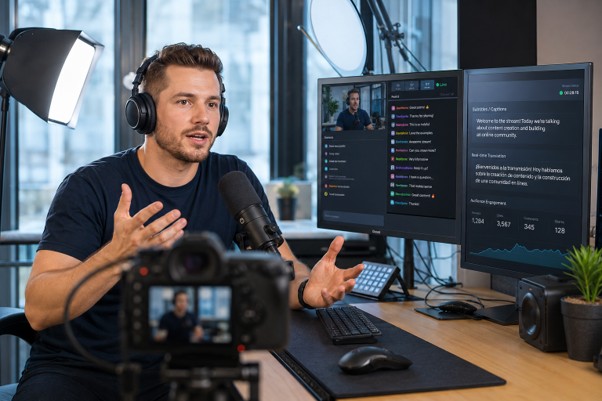
This technology offers advanced features for enhancing user experience. Platforms featuring live trans cam services benefit from high-definition video quality combined with intelligent compression mechanisms, allowing for clarity even in lower bandwidth scenarios. Participants can communicate effectively without compromising on visual fidelity, which is essential for interactive and engaging live experiences.
Security remains a top priority, with encrypted channels safeguarding data integrity and privacy throughout transmission. Implementing multifactor authentication further protects user accounts, establishing a secure environment for both personal and professional exchanges.
Customization options empower users to tailor their experience. Adjustable settings for video quality, bandwidth usage, and interface layout cater to different needs, ensuring accessibility for diverse audiences. Engaging tools such as interactive whiteboards and real-time polling enhance participation and collaboration.
Real-Time Language Translation Capabilities for Global Communication
Utilizing real-time language translation can significantly enhance cross-border conversations. For immediate interactions, deploy platforms that offer instant text translation and audio interpretation. Prioritize services that support multiple languages to ensure broader accessibility. Choose those that leverage advanced neural networks for accuracy in context and idiomatic expressions.
Key Advantages
Timely translation can reduce misunderstandings, facilitating smoother interactions in diverse environments. For business meetings, implement simultaneous translation tools to cater to participants speaking different languages, allowing all voices to be heard simultaneously without delay. This approach aids in creating a more inclusive atmosphere.
Adding visual components like subtitles or transcripts during conversations can further improve comprehension. This dual-channel approach caters to various learning styles and ensures that information retention increases for all participants. By displaying translations in real-time, crucial details can be emphasized effectively.
Choosing the Right Tools
Evaluate translation apps based on their language database size and real-time processing speed. Consider options that feature offline capabilities for areas with poor connectivity. Compatibility with various devices, from smartphones to desktop systems, expands usability in different scenarios.
Data security remains crucial; select tools that prioritize user privacy. Understand how these applications handle sensitive information, especially in corporate contexts where trade secrets might be discussed. Encryption methods must meet industry standards to safeguard conversations.
Regular updates and training on the tools empower users to leverage their full potential. Provide resources and workshops to enhance skills related to efficient usage. Enhancing proficiency facilitates rapid responses and maximizes the benefits of real-time translation across various contexts.
Incorporating these advanced translation capabilities into routine practices can transform how individuals and organizations communicate cross-culturally. Prioritizing seamless interactions can build stronger relationships and foster collaboration, ultimately enhancing global engagement.
Integration with Social Media Platforms for Enhanced User Engagement
To maximize audience interaction, prioritize seamless connectivity with popular social media channels. Implement features enabling direct sharing of content, allowing users to effortlessly broadcast their experiences. Consider utilizing APIs that facilitate real-time updates and notifications within these platforms. This not only amplifies visibility but encourages spontaneous engagement from followers, enhancing overall interaction metrics.
Embed user-generated content tools that allow participants to tag social media accounts, creating a cycle of sharing and feedback. Encourage challenges or campaigns that incentivize sharing through rewards or recognition, further boosting participation rates. These strategies cultivate a community atmosphere, drawing in more users and establishing a feedback loop that enhances retention and loyalty.
Q&A: Live trans cam
What is Live Trans Cam Technology?
Live Trans Cam Technology refers to the capability of cameras to provide real-time translation of spoken language into written text. This technology is often utilized in environments such as conferences, educational settings, and live broadcasts to help audiences who speak different languages understand the content being presented. By integrating advanced speech recognition and translation algorithms, Live Trans Cam ensures smooth communication across language barriers.
How does Live Trans Cam Technology work?
The technology operates by capturing audio through a microphone, which is then processed using speech recognition software to convert spoken words into text. This text is subsequently translated into the desired language using machine translation services. The real-time aspect means that as the speaker talks, the words appear almost instantaneously on a screen, allowing for seamless interaction among participants who might not share a common language.
What are the main applications of Live Trans Cam Technology?
Live Trans Cam Technology has a wide range of applications, including but not limited to live events, international conferences, virtual meetings, and educational settings. In live events, it can assist attendees in understanding speeches or presentations in real-time. In academic environments, it can aid multilingual classrooms by providing translations for lectures. Additionally, businesses using this technology can enhance communication with global clients during meetings or webinars, making interactions more inclusive and effective.
What are the benefits of using Live Trans Cam Technology?
One of the primary benefits of Live Trans Cam Technology is its ability to break down language barriers, making communication more accessible. This inclusivity can enhance audience engagement and participation at events. Furthermore, the instantaneous nature of the translations allows for a smoother flow of information, reducing the need for lengthy pauses for interpretation. This technology also supports educational initiatives by facilitating learning in multilingual environments, making resources available to a broader audience.
Are there any limitations to Live Trans Cam Technology?
While Live Trans Cam Technology is highly innovative, it does face certain limitations. One challenge is the accuracy of translations, which can be affected by factors such as accents, background noise, and the complexity of the language being spoken. Additionally, the reliance on technology means that technical issues can arise, potentially disrupting services. Finally, there may be limitations in handling colloquialisms or specialized terminology, which could lead to misunderstandings if not properly managed.
What are the main features of Live Trans Cam Technology?
Live Trans Cam Technology offers various innovative features designed to enhance communication and streaming processes. At its core, it provides real-time transcription of spoken language, which is particularly useful for accessibility during live events or broadcasts. Additionally, it often includes automatic language detection, allowing it to adapt to various languages and dialects on the fly. The technology typically integrates seamlessly with video conferencing tools, enabling users to see transcribed text side by side with video. This feature not only aids in understanding but also facilitates the participation of individuals who are deaf or hard of hearing. Furthermore, many applications of Live Trans Cam also focus on user-friendly interfaces, ensuring that participants can engage with the content without the need for extensive technical knowledge.
How does Live Trans Cam Technology enhance accessibility for deaf and hard of hearing individuals?
Live Trans Cam Technology significantly improves accessibility for deaf and hard of hearing individuals by providing instantaneous text representations of spoken dialogue during live events. This real-time transcription allows those who may struggle to hear or comprehend spoken words to follow along without missing vital information. The visual display of spoken content is especially beneficial in fast-paced environments, such as conferences or lectures, where keeping up with the conversation can be challenging. Additionally, many implementations of this technology support multiple languages and dialects, making it inclusive for diverse audiences. By enabling greater participation and engagement, Live Trans Cam serves as a critical tool for ensuring that everyone has equal access to information and communication in various settings, thus promoting inclusiveness.